Showing posts with label Cave Cooperative. Show all posts

Friday, 11 April 2014

BOGOF is spreading (as far as Florensac)

Buy-one-get-one-free has long been criticised as a UK retail phenomena, or even national disease. There seems to be an established vicious circle with retailers making 2-for-1 offers with consumers seemingly lapping them up. Whether such deals offer value depends on the true price of the "one" of course.

Florensac lies on the flat lands near the southern end of the river Hérault and sports a seemingly successful cave cooperative. Re-branded as Vinipolis a spacious and swish boutique and tasting area has been constructed that also houses an excellent everyday restaurant Le Bistrot d'Alex (€22 three course lunch menu) where their wines are almost given away.

Unmissable en-route to the restaurant was this promotion - essentially the equivalent of 12 bottles of rosé for €25. Having consumed the Rosé d'Eté with lunch my judgement is thumbs up for deal. The wine is a masterpiece of technological wine making and perfect for quaffing without a thought rather than something to analyse/discuss. Just as well as our friend went for both deals so it won't be long before the next glass or two - proving the rosé weather holds.


Tuesday, 3 September 2013

Cooperative starts Sauvignon harvest (at last)

A notice outside the Aspiran Cooperative announcing the start of the Sauvignon harvest, 4th September 2013. The caves at Aspiran and Puilacher will receive all the grapes over 4 days from 195 hectares in the central Hérault valley.


The estimate is 400 Tonnes a day which will give Clochers et Terroirs the equivalent of well over 2 million bottles of wine equating to a yield of 80 hectolitres/hectare (seems high to me as an independent grower fanatic).


There is a reminder to add metabisulphite (E223 or E224) so this won't be vin naturel sans soufre.

Saturday, 20 October 2012

Vin Primeur 2012 apero time


Clochers and Terroirs is an enormous operation by any standards. Eleven central Hérault valley villages have combined forces and now represent some 850 grape growers with 2,800 hectares of vines. Production is 200,000 hl that equates to over 26 million bottles, although most will go into popular 10 litre BIBs.


Every other cooperative seems to make Vin Primeur these days. At Clochers and Terroirs the launch of the new vintage is an opportunity for villagers to have a convivial apero or three and be subjected to mercifully brief thank you speeches.

The cave at Nébian could easily host a tennis match plus audience in the space surrounded by dozens of now defunct double-decker cuves.

As for the wine itself, it avoids overdoing heady carbonic maceration induced fruit and has a pleasant dry and slightly tannic adult finish. That said, analysing it isn't really the point. Given that this year's harvest is down 25%, at least in one of the communes, it was a very generous event.

Monday, 31 October 2011

Cave Cooperative futures

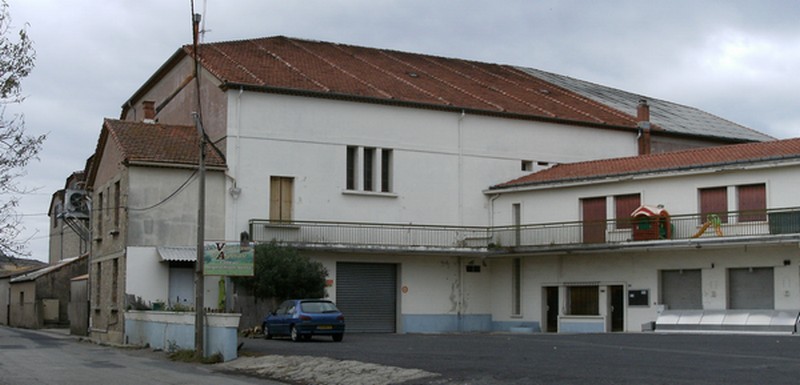
Like many in the region, the Cave Cooperetive at Aspiran on the west side of the central Hérault valley has been in decline. Wine hasn't been bottled for pushing a decade, no doubt because a massive investment in equipment is required to make wine to modern standards. It hasn't always been like that. 1957 saw the first, at least for a Languedoc cooperative, Vaslin horizontal presses installed (replaced in 1975). As recently as 1988 was another first when a Bucher pneumatic press was acquired.


There are similar stories in the area. The cooperative at Caux closed several years ago and is already a decayed building - the grapes go down the road to Les Caves Molière at Pézenas. Nizas has a similar tale.

The trend has been for cooperatives to combine to create even greater economies of scale, but there are notable local exceptions. Fontès and Cabrières seem to do well and are certainly good at marketing. Fontès boasts the best rosé in the area and a new customer reception salon has been constructed this year. Cabrières uses their reception space to host art exhibitions and has managed to maintain a reputation for its wine. To the south at Florensac a light and airy tasting and sales space has been created with an excellent and popular attached restaurant Bistro d'Alex serving their wine at near retail price. Adissan has more land suited to growing Clairette and their bottles line the shelves of the regions and no doubt beyond supermarkets. Much will also be supplied to make Noilly Prat in Marseillan (blog article here). Further afield I have commented on the quality of the Roquebrun Cooperative in the Saint-Chinian appellation.

Things are looking more promising for the grape growers of Aspiran to obtain a higher price. Between 1963 and 2003 eight villages combined to produce wine under the Clochers et Terroirs branding. An enormous modern facility at Puilacher now makes all the wine and the Aspiran cooperative has joined in. The relatively dull cooperative building (photo above) survives for now as the harvested grapes are collected and de-stemmed there before being tankered off to Puilacher. I tasted some of the wine at a recent village event and the Chardonnay for example was well made and offered some interest.

Saturday, 14 May 2011

Terrasses de Maynard aka Roquebrun coop

I'm always wary of cooperative wines. There is something depersonalised about them. The wine can only be as good as the poorest performing grape grower and usually undergoes particularly heavy handed winemaking to counter this. Most I've tasted at events along with independents and they show badly, but it has to be recognised they provide a massive service for the sub €5 a bottle market and have local affinity.

Coops are aware of this image and seek the cachet of an independent grower with their flashier cuvées. This bottle of 2008 Saint-Chinian Roquebrun "Terrasses de Maynard" is testimony to that - you need to read the micro-print to spot the origin as Cave de Roquebrun. I encountered the wine at dinner where the hosts, who spotted it at a local grande surface, stated they followed the cave and its fine reputation for decades. In the glass it was a pleasant melange of brambles, cherry and smoke with some grippy tannins and a nice medium weight. The oak was kept in the background - rare restraint with cooperative "premium" wines. It finished as it started, but was nevertheless a pleasant drink, confirmed a few days later having procured a €6.40 bottle to consume chez nous. 60% Syrah with Mourvèdre and Grenache from a schist terroir very similar to Faugères that borders to the east. A pity so few co-ops seem able to achieve this standard and hence value for euros. The flowers are wild garlic by the way.