Showing posts with label Aspiran. Show all posts

Saturday, 3 October 2015

Independents - an upwards trend

Aspiran took the European Weekend of Heritage (patrimoine) seriously this year and included in the events and exhibitions was a display covering wine. Specifically highlighted were the Aspiran producers who now number 10, along with the cave cooperative (Clochers & Terroirs).


The longest established are Domaine de Fabrègues (1835) and Chateau Malautié (1900). Domaine des Montèzes arrived in 1995 having been displaced by the building of the A75 autoroute above Lodeve. The grapes around their Aspiran property apparently go to the cooperative with wine being made on site from grapes brought down from their Pégairolles de l’Escalette vineyards.

It was after 2000 that new arrivals took root, possibly fuelled by the decline of the cooperative before relatively recently joining the Clochers & Terroirs clan of cooperatives. Domaines Mon Mourel, Ribiera, Clos Mathelisse, Villa Symposia, des dimanches and most recently Gregory White and Mas Troqué complete the list.


Interestingly several producers in nearby villages have vineyards in the commune, ones I know about being Mas Costefere (Adissan), Julien Peyras (Paulhan) and Domaine les Quatre Amours (Bélarga).

Are there trends here? Of the new arrivals at least two (David Caer of Clos Mathelisse and Christelle Duffours of Mas Tronqué) have strong local roots. The six most recent arrivals practice organic standards with minimal intervention in the cave. Five of them appear regularly at Vins Nature events.

Perhaps the main observation is that villages with relatively dynamic and successful cooperatives have content viticulteurs and precious little land for sale, so have few independents. Witness nearby Fontès and Cabrières that both have exciting terroirs but few independents. The nearest equivalent commune with a similarly diverse land (limestone Villafranchien and galets roulés, clay with silt and limestone, basalt et al) is Caux, where independents also thrive while the abandoned cave cooperative building decays into an eyesore.

Wine from almost all the producers can be purchased from the Aspiran Tabac which is by the village crossroads.

Wednesday, 24 June 2015

Journée oenotouristique with Les Beaux Nez Rouges

Groups of small independent growers banding together to do marketing is not new. The coopératives movement that started over 100 years ago was about collectively marketing wine before the construction of the cavés we see today. The Outsiders group and Vinifilles are two contemporary examples from the region with the themes of growers from outside the region and vigneronnes respectively. The theme for Les Beaux Nez Rouges is they share the same oenologue Hervé Chabert, albeit that for many he seems more a friend, sounding board and a man with a portable bottling line. The diverse styles of wines being made back this up - these are independently minded growers.

Lunch beckons at Villa Symposia
Apparently the group have held an annual event for 10 years. This year over 100 enthusiasts headed to Villa Symposia in Aspiran - seemingly the epicentre of the groups vineyards with the majority visible from the commune. The format of the day is an outdoor tasting followed by lunch and optional promenades en calèche (horse carriage rides). The quality of the buffet lunch created by the vigneron's families is taken as seriously as the wine making. Sensational sour-dough baguettes were ordered from the wood burning ovens in nearby Canet, pélardons from Mas Rolland, chèvre tomme from the Larzac, organic vegetables from the commune, 25 Kg of fruits including strawberries picked in the Aude the day before.

Post lunch
Promenades en calèche

Eight vignerons were showing 23 wines between them so tasting everything wasn't onerous. The majority of bottles were under €10 making it the most modestly priced tasting line up I've attended for ages.

Here are some highlights

Domaine Bonetto Fabrol (Philippe Bonetto) are north of Orange in the Rhône and had the furthest to travel. The journey will have temporarily upset their wines but enough promise and interest came through Colombier 2014 (Grenache, Syrah) and Heritage 2013 (Syrah) that I purchased a couple of bottles. Nice perfume and softness, especially pronounced on the Heritage (sic) Syrah. The only openly biodynamic producer present.

This was my first encounter with Domaine Emile et Roses (Marcel Gisclar) at a tasting. The Carignan blanc 2014 was just starting to come to life with fresh garrigue herbs and lovely integrated acidity plus a bit of body. The reds weren't for me. For Léa 2011 (Grenache, Syrah and Cabernet) I noted "woody woodpecker". Unfortunately Marcel wasn't showing his Cinsault or Aramon and I was shocked to learn that his delicious inexpensive Mouvedre is no longer made. This makes our couple of bottles sort of irreplaceable.

Mas d'Agalis (Lionel Maurel) Le Grand Carré 2014 (Terret, Clairette, Vermentino and Chenin Blanc) was certainly the wildest white on show - spiky, apples and nuts, refreshing. Will divide opinion but not mine. Yo no puedo mas 2013 (Carignan with Syrah, Grenache and Cinsault) is a red that ping-pongs savoury fruits around the palate and has become one of our favourites.

Villa Symposia (Eric Prissette) were the home team. The prevailing gale was keeping everyone cool and would have passed through their vines just seconds before reaching us. Blanc 2014 (Grenache, Carignan, Terret) is their best so far and they've absolutely nailed the level of oak to my taste i.e. you barely notice it. Amphora 2013 (Cinsault with some Syrah) is proper red wine with some grippy tannins yet supple character. Equilibre 2012 (Syrah plus Carignan, Mourvèdre amd Grenache) is more savoury with more length and obvious but well integrated oak.


Winemaker Nenko Dunev with venue owner Éric Prissette
David Caer pours his crunchy Cinsault

Clos Mathelisse (David Caer) makes one red, Exorde 2013 (Cinsault) which is our house and party wine - crunchy with hints of bitter cherries, uncomplicated inexpensive drinking. The only pure Cinsault on show but a good one. I think the secret is the cool north facing aspect of the vineyard.

Domaine Grégory White took over the promising Mas d'Arlenques a couple of years ago when the previous owner was forced to retire with back trouble. White is Rosé 2014 (Grenache, Cinsault) is a relatively rare no added sulphur rosé. Soft peach nose with a palate that lets the light in. Terret 2013 has hints of the sea and iodine and an acidity that isn't contrived. Jamais pas Soif 2014 (Grenache) I'd tasted a couple of months before and found it a touch too much heady fruit gourmandise, now seemingly calmer and more interesting.

Domaine Ribiera (Régis Pichon) have no red wine until the 2014s are bottled in a few weeks time. Y'a un Terret 2013 has a mineral flint character and structure that's rare in the midi. Canilles R... 2013 (Rousanne) manages to be a Rousanne that avoids being heavy and aromatic, the secret being no added sulphur apparently so the result is more northern Rhone than midi. Canilles 2014 (Clairette) is more subtle and understated with flowers, citrus fruits and fennel.

Grégory White enjoys his zero sulphite rosé
Cool as mid-summer's day - Christine and Régis Pichon

Wednesday, 15 May 2013

Domaine Thierry Navarre including Aspiran Noir

Last year I wrote about a small exhibition of lithographs 150 Years of Languedoc grape varieties. One variety I highlighted was Aspiran Noir and commented that Domaine Thierry Navarre at Roquebrun had rescued and grafted some vines and is now making wine from them. By chance the caviste at Les Caves Gourmandes in Gignac recommended a bottle that turned out to be Thierry's Rybeyrenc - yet another synonym/spelling variation for the variety.


Rybeyrenc 2011 has an attractive red colour, quite light for a Languedoc, and a distinct aroma of strawberry and mulberry. The palate is light and refreshing, a delight to just drink and at 11 deg. is a shock to one accustomed to southern reds. The closest in style would perhaps be a basic vrac red from a co-op petrol pump, but in this case the wine has the rustic edges and other dodgy characteristics eliminated and a lot more interest.

I've tried a couple of other of Thierry Navarre's wines recently. Le Laouzil 2010, a classic red blend enjoyed at the superb Octopus restaurant in Béziers where it's listed with a very modest mark-up. Ideal luncheon fayre, it also danced around a bit en bouche - the only clue that many would classify it as vin naturel.

Cuvée Olivier 2011 is also an appellation blend and is a fuller, slightly richer style with wonderful poise and balance. Apparently aged in 500 litre barrels, but clearly these are not new as the oak is not really noticeable which is the way I like it. Feels like a wine that will keep for a few years yet also drink well throughout its life.

Prices seem reasonable and range from €8 to €13 for the Olivier. Must get over there.


Monday, 22 April 2013

En retard

Northern Europe experienced the coldest March ever recorded in places with the meteorological finger pointed firmly at the jet steam which was sitting further south than "normal" for early spring. The consequence of this in the Languedoc has been a wet March, certainly the wettest for more than 50 years and near the Pic Saint-Loup all records were broken with 357mm for the month (or pushing half and inch a day if you prefer).

Given there were relatively few damaging floods this is mostly good news as the water table is now back to "normal" after a run of too many relatively dry winters. Ditches have flowing water and the countryside looks greener for it, as do weed killer free vineyards.

Weed killer free vineyard enjoys a wet 2013 spring
An asparagus grower in the village told me the season started a month late, although a mid-March start would have been considered a bit prompt. Cold nights are blamed with the inability of the skies to string together more than a day of sun. In the photo above, taken on the 11th April, the vines are visually dormant. A week of sunshine from 12th has done the trick and bud-burst in under way.

Old Cinsault vine bud-burst 22nd April 2013
Given a "normal" summer, no doubt the least likely scenario, the harvest is going to be a couple of weeks late. At least the drier vineyards will be sparing established vines water stress.

Thursday, 18 October 2012

150 Years of Languedoc grape varieties

The Béziers médiathèque is an impressive new building just to the east of the town centre. An exhibition "150 years of grape varieties in the Languedoc" has a display of lithographs of grape varieties by Henri Marès published in 1890. This is one of them.


My translation "Probably a very old variety originating from the Bas-Languedoc.
Long living, the aspiran variety displays an elegant poise and shape in its leaves and bunches. In the departments of the Bas-Languedoc it is [in 1890] usually the preferred table grape for eating. It is delicious and wholesome and very moreish, one can east vast quantities. No other variety is lighter, more agreeable and easier to digest".


Aspiran is a small village just off the Hérault valley in the Pézenas appellation (I also have a blog on the village Aspiran Postcard). To my knowledge this is the only French planted grape variety named after a local place, or at least a small village (Syrah derives from Shiraz in Persia, now Iran). Today Aspiran seems to be better known under the synonym Ribeyrenc, but that said the grape is seriously rare with just a handful of vines growing in a few Languedoc domaines. It seems following the phylloxera epidemic and frosts of 1956 the variety was not replanted.

A big hope is Domaine Thierry Navarre at Roquebrun who has rescued and grafted some vines and is now making a Ribeyrenc. I now need to seek this out.

Other references I have found are Wikipedia en.wikipedia.org/wiki/Aspiran_Noir
And a fiche in French from INRA

The dossier on the médiathèque exhibition is here (for now) dossier-cepage.pdf

Monday, 31 October 2011

Cave Cooperative futures

Like many in the region, the Cave Cooperetive at Aspiran on the west side of the central Hérault valley has been in decline. Wine hasn't been bottled for pushing a decade, no doubt because a massive investment in equipment is required to make wine to modern standards. It hasn't always been like that. 1957 saw the first, at least for a Languedoc cooperative, Vaslin horizontal presses installed (replaced in 1975). As recently as 1988 was another first when a Bucher pneumatic press was acquired.


There are similar stories in the area. The cooperative at Caux closed several years ago and is already a decayed building - the grapes go down the road to Les Caves Molière at Pézenas. Nizas has a similar tale.

The trend has been for cooperatives to combine to create even greater economies of scale, but there are notable local exceptions. Fontès and Cabrières seem to do well and are certainly good at marketing. Fontès boasts the best rosé in the area and a new customer reception salon has been constructed this year. Cabrières uses their reception space to host art exhibitions and has managed to maintain a reputation for its wine. To the south at Florensac a light and airy tasting and sales space has been created with an excellent and popular attached restaurant Bistro d'Alex serving their wine at near retail price. Adissan has more land suited to growing Clairette and their bottles line the shelves of the regions and no doubt beyond supermarkets. Much will also be supplied to make Noilly Prat in Marseillan (blog article here). Further afield I have commented on the quality of the Roquebrun Cooperative in the Saint-Chinian appellation.

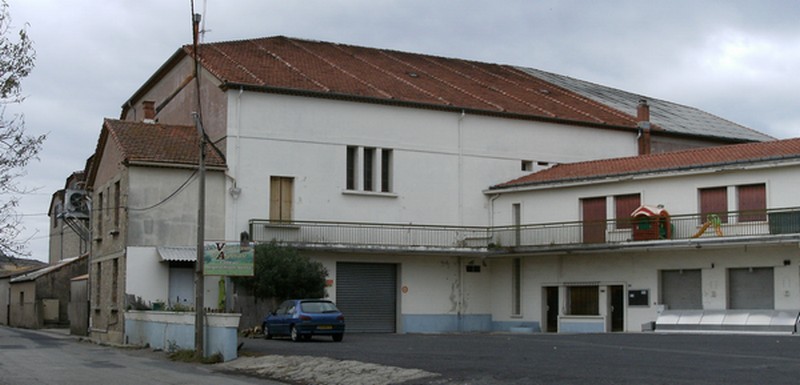
Things are looking more promising for the grape growers of Aspiran to obtain a higher price. Between 1963 and 2003 eight villages combined to produce wine under the Clochers et Terroirs branding. An enormous modern facility at Puilacher now makes all the wine and the Aspiran cooperative has joined in. The relatively dull cooperative building (photo above) survives for now as the harvested grapes are collected and de-stemmed there before being tankered off to Puilacher. I tasted some of the wine at a recent village event and the Chardonnay for example was well made and offered some interest.

Sunday, 10 October 2010

Domaine Ribiera


Aspiran has an historical legacy of growing Clairette that ends up in that rather aristocratic vermouth Noilly Prat. With the Terrasses du Larrzac starting just up the road and a basalt lava flow identical to that at Caux (near Pézenas) just to the south, Aspiran definitely under performs. Things should start to change once some new wave independents become established. Already some vineyards are owned by outsiders in neighbouring villages and new plantings are evident on some of the hillside sites.

Of the half dozen independents, Domaine Ribiera excites the most. Before starting in 2005 Christine and Régis Pichon had, between them, previous lives that included sommelier, restaurateur and wine buyer for a prestigious épicerie. They now have 6 hectares in various parcels throughout the commune and practice organic and natural wine techniques including fermentation using the yeast present on the grape skins.

Carignan and Tapenade

La Vista 2008 2/3 Grenache and 1/3 Carignan. Peppery fruit, redcurrents, fennel. A gentle wine, probably connected to the absence of Syrah and oak, that's deceptively full of flavours that gently spiral around. One of those wines I didn't get on my first encounter back in the spring. Proves that oak isn't essential for complexity and rounded tannins. €9 to €10.

Carignan 2005 chocolate, liquorice, blackberry hints of eucalyptus freshness on a base of stalks. More than a quaff. Note that this wine is no longer made but Le Nez dans le Verre in Pézenas have some for just €6.

Les Canilles 2008 white Roussanne with 10% Clairette. Not tasted since it was younger and needing time to open up - quite herby with a good clean mouth feel.